
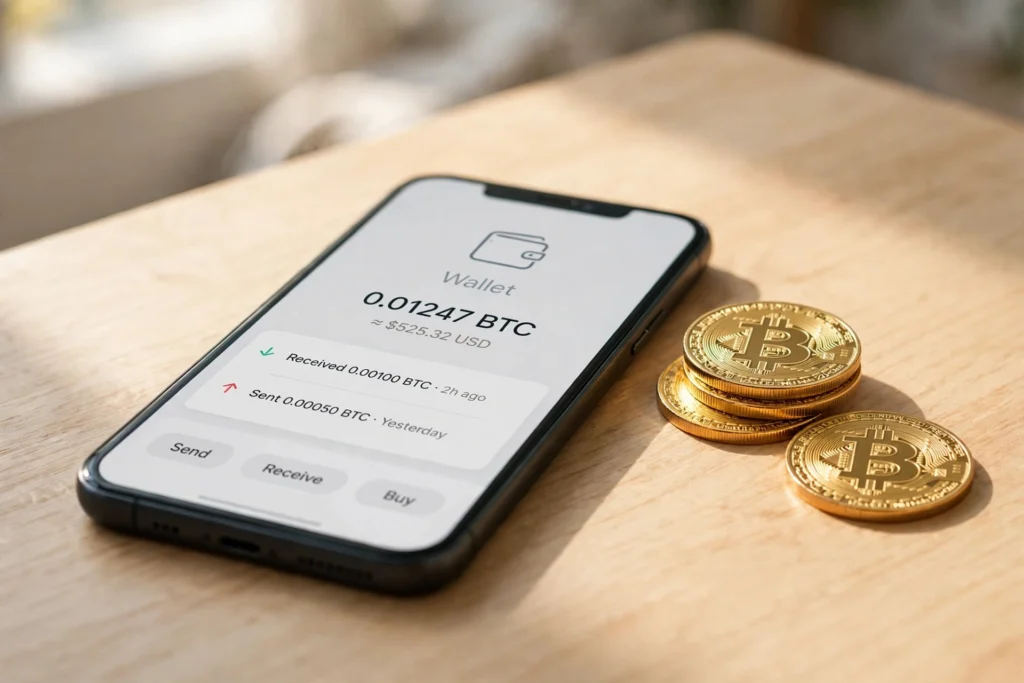

If you have spent any time claiming free crypto from faucets, you have almost certainly seen the name FaucetPay. Almost every faucet site offers it as a payment option, and many of them will not pay you any other way. So what is FaucetPay, exactly — and do you actually need it?
In short, FaucetPay is a free online microwallet built for tiny cryptocurrency payments. It collects the small rewards you earn from Bitcoin faucets, paid-to-click (PTC) sites and offerwalls in one place, so you can withdraw them later as a single, worthwhile amount. It is not a faucet itself, and it is not a bank. It is the middleman that makes micro-earnings practical.
This guide explains how FaucetPay works, how to set up an account, what it costs, and whether it is safe — in plain language, with no hype.
What Is FaucetPay?
FaucetPay is a custodial cryptocurrency microwallet. That sounds technical, so let me break it down.
A normal crypto wallet, like the one on your phone, holds your coins on the blockchain and gives you the private keys. FaucetPay works differently. It holds your coins for you in an internal account, and it keeps the private keys. You log in with an email and password, just like any other website, and you see a balance for each coin you have earned.
The “micro” part matters. FaucetPay exists because faucet rewards are tiny — often just a few satoshis, the smallest unit of Bitcoin, worth a fraction of a cent. Sending such a small amount directly on the Bitcoin blockchain would cost more in network fees than the reward itself. Nobody would do that.
Instead, a faucet sends your reward to your FaucetPay account as an internal transfer. No blockchain transaction happens, so there is no network fee and the payment arrives instantly. Your tiny rewards from dozens of different sites pile up in one balance until the total is big enough to withdraw properly.
The platform has been running since 2019 and, by its own figures, connects more than 600 faucet sites and counts around 2.8 million wallets. It supports over 20 cryptocurrencies, including Bitcoin (BTC), Ethereum (ETH), Litecoin (LTC), Dogecoin (DOGE), Tron (TRX) and Tether (USDT).
Why Do You Need a Microwallet at All?
Imagine you claim 50 satoshis from a faucet. At current prices, that is worth far less than one cent. If the faucet tried to send that to your personal Bitcoin wallet, the network fee alone could be hundreds or thousands of times larger than the payment. It simply does not work.
This is the problem FaucetPay solves. By keeping payments inside its own system, it removes the blockchain from every small transfer. The faucet pays FaucetPay, FaucetPay credits your account, and the blockchain only gets involved once — when you finally withdraw a larger amount to your own wallet.
Without a microwallet, most faucets could not pay you at all. That is why so many list FaucetPay as their default — sometimes only — payout method.
How FaucetPay Works: Step by Step
The flow is simple once you see it:
1. Create a free account. You sign up at faucetpay.io with just an email address. There is no KYC, no ID check and no selfie — just an email and a password. Turn on two-factor authentication (2FA) right away; we will come back to why that matters.
2. Link your email on faucet sites. When you join a faucet, enter the same email address you used for FaucetPay. That is how the faucet knows where to send your earnings.
3. Claim rewards as usual. You solve captchas, watch ads, or complete tasks on the faucet. Each time you claim, the site sends your reward to your FaucetPay balance. The payment is instant and free, and you can watch the balance grow in your dashboard.
4. Withdraw when you are ready. Once your balance passes the minimum withdrawal amount for that coin, you can send it to your personal wallet or an exchange. FaucetPay charges a withdrawal fee that depends on the coin and the speed you choose, so always check the live fees page before you withdraw.
FaucetPay does not create the rewards or decide whether a faucet is honest. It only moves and stores the small payments those sites send you.
What Can You Do Inside FaucetPay?
FaucetPay is more than a collection box. It has grown into a small earning hub of its own:
- Faucet List: A directory of faucet sites that pay through FaucetPay, so you can find new places to earn.
- PTC ads: You can earn small amounts by viewing advertisements inside FaucetPay itself.
- Offerwalls: Complete surveys and app-install tasks from partner providers for extra rewards.
- Coin Swap: Convert one coin into another inside your account, for a fee of around 3 percent.
- Staking and rewards: Newer features let you earn a return on balances you leave in the platform — but remember that leaving money on any custodial platform carries risk.
You do not need any of these extras. For most beginners, FaucetPay is simply where faucet earnings land.
FaucetPay Fees and Withdrawal Minimums
FaucetPay is free to join, and deposits from faucets cost you nothing. The costs appear when you move money out.
Withdrawal fees and minimums change over time and differ by coin, network and speed. As a rough guide from late 2026, a normal Litecoin withdrawal needed about 0.002 LTC with a tiny fee, Dogecoin needed around 30 DOGE, Tron around 20 TRX, and USDT (BEP-20) around 8 USDT. Bitcoin minimums are higher, which is why many beginners withdraw in Litecoin or Dogecoin instead — the fees are lower and the minimums are easier to reach.
Two tips will save you money. First, always check the live Fees page on faucetpay.io before withdrawing, because the numbers change. Second, let your balance grow first: fees take a bigger percentage bite out of small withdrawals, sometimes 5 to 10 percent.
Is FaucetPay Safe and Legit?
Yes, FaucetPay is a legitimate platform with a long track record — it has paid out consistently since 2019. But “legit” does not mean “risk-free”, and you should understand the risks before trusting it with your earnings.
It is custodial. FaucetPay holds the private keys, not you. If the platform ever froze accounts, changed its rules or shut down, your balance would be at risk. This is the same risk every exchange carries, and it is why experienced users treat FaucetPay as a transit point, not a savings account: collect your earnings, then withdraw them to a wallet you control.
Accounts can be frozen. Users occasionally report frozen accounts or slow support, often after logging in from a new device or location. Use a strong, unique password and enable app-based 2FA from day one.
There is no official mobile app. FaucetPay is web-only. Any “FaucetPay app” you find in a third-party store is fake and could steal your login details. Only ever sign in at faucetpay.io.
Scammers impersonate it. Fake FaucetPay pages and support accounts are common. Nobody from FaucetPay will ever ask for your password or your 2FA code.
Keep only small amounts on FaucetPay, withdraw regularly, and never store money there that you cannot afford to lose.
FaucetPay vs a Normal Crypto Wallet
A normal wallet, like Trust Wallet or a hardware wallet, gives you full control of your coins on the blockchain. You hold the keys, you pay network fees, and nobody can freeze your balance. It is the right place for money you want to keep.
FaucetPay gives you convenience instead of control. It accepts payments too small for the blockchain, keeps them in one place, and lets you withdraw in bulk. It is the right place for small earnings on their way somewhere else.
5 Beginner Mistakes to Avoid
- Using the same password everywhere. If one faucet site leaks your password, your FaucetPay balance is the next target. Use a unique password and 2FA.
- Leaving large balances sitting there. Withdraw once you pass the minimum. A microwallet is a hallway, not a vault.
- Withdrawing too early. Small withdrawals lose a bigger share to fees. Patience pays.
- Trusting fake apps and links. Only use faucetpay.io. Check the address bar every time.
- Expecting to get rich. Faucet earnings are pocket money — a few dollars a month for most people. Anyone promising big income from faucets is selling you something.

Frequently Asked Questions
Is FaucetPay free to use?
Yes. Creating an account costs nothing, and receiving payments from faucets is free. You only pay fees when you withdraw to an external wallet or swap one coin for another.
Do I need FaucetPay to use Bitcoin faucets?
Not always, but most faucets pay through FaucetPay by default, and some offer no other option. Without it, you will be locked out of a large share of faucet sites.
Which coins does FaucetPay support?
More than 20, including Bitcoin, Ethereum, Litecoin, Dogecoin, Tron, Tether (USDT), Bitcoin Cash, Dash and Zcash. The exact list changes, so check the supported-currencies page on faucetpay.io.
How long do FaucetPay withdrawals take?
It depends on the coin and the speed you choose. Normal withdrawals are usually processed within hours, while priority withdrawals are faster but cost more.
Can I withdraw FaucetPay to my bank account?
No. FaucetPay does not send money to bank accounts. You withdraw crypto to your own wallet or an exchange, and converting it to cash is a separate step on another service.
Is FaucetPay a scam?
No. FaucetPay is a real, long-running microwallet that has paid faucet users since 2019. It is custodial, so it carries counterparty risk, but it is not a scam. Treat it as a collection point and withdraw regularly.
Final Thoughts
So, what is FaucetPay? It is the quiet infrastructure behind almost every Bitcoin faucet — a free microwallet that turns dozens of tiny, worthless-on-their-own payments into one balance you can actually withdraw. It will not make you rich, and it is not a place to store serious money. But if you want to earn free crypto from faucets and PTC sites, it is the tool that makes the whole thing work.
Set it up in five minutes, turn on 2FA, link your email on the faucets you use, and withdraw to your own wallet once your balance is worth moving.
Disclaimer: This article is for educational purposes only and is not financial advice. Cryptocurrency earnings from faucets are small, values can change quickly, and custodial platforms carry risk. Never invest money you cannot afford to lose, and always do your own research before using any earning platform.