
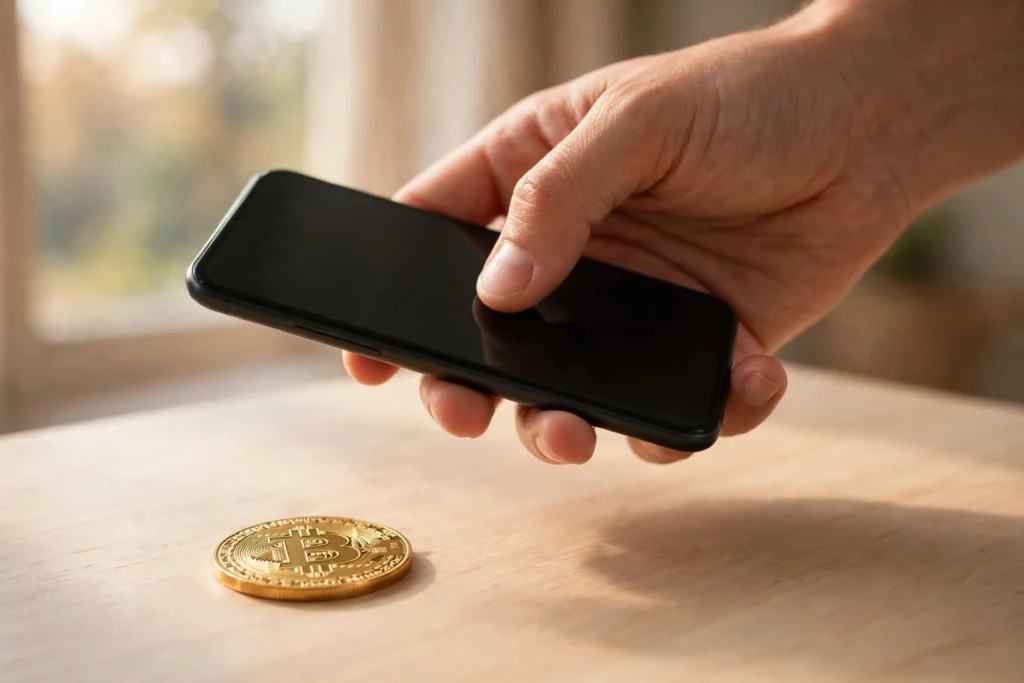

“Free Bitcoin.” Two words that show up everywhere online, usually next to a claim button and a countdown timer. It sounds like a trick — and sometimes it is. But the idea behind it is real, and nearly as old as Bitcoin itself.
So, what is a Bitcoin faucet? It is a website or app that gives you very small amounts of Bitcoin for doing very small things: solving a captcha, watching a short ad, answering a quiz, or playing a quick game. The amounts are tiny — fractions of a cent at a time — but the Bitcoin is real, and you can withdraw it once you have collected enough.
In this guide, you will learn what a Bitcoin faucet is, how it works, how much you can honestly expect to earn, and how to tell a genuine faucet from a scam. No hype — just the facts a beginner needs.
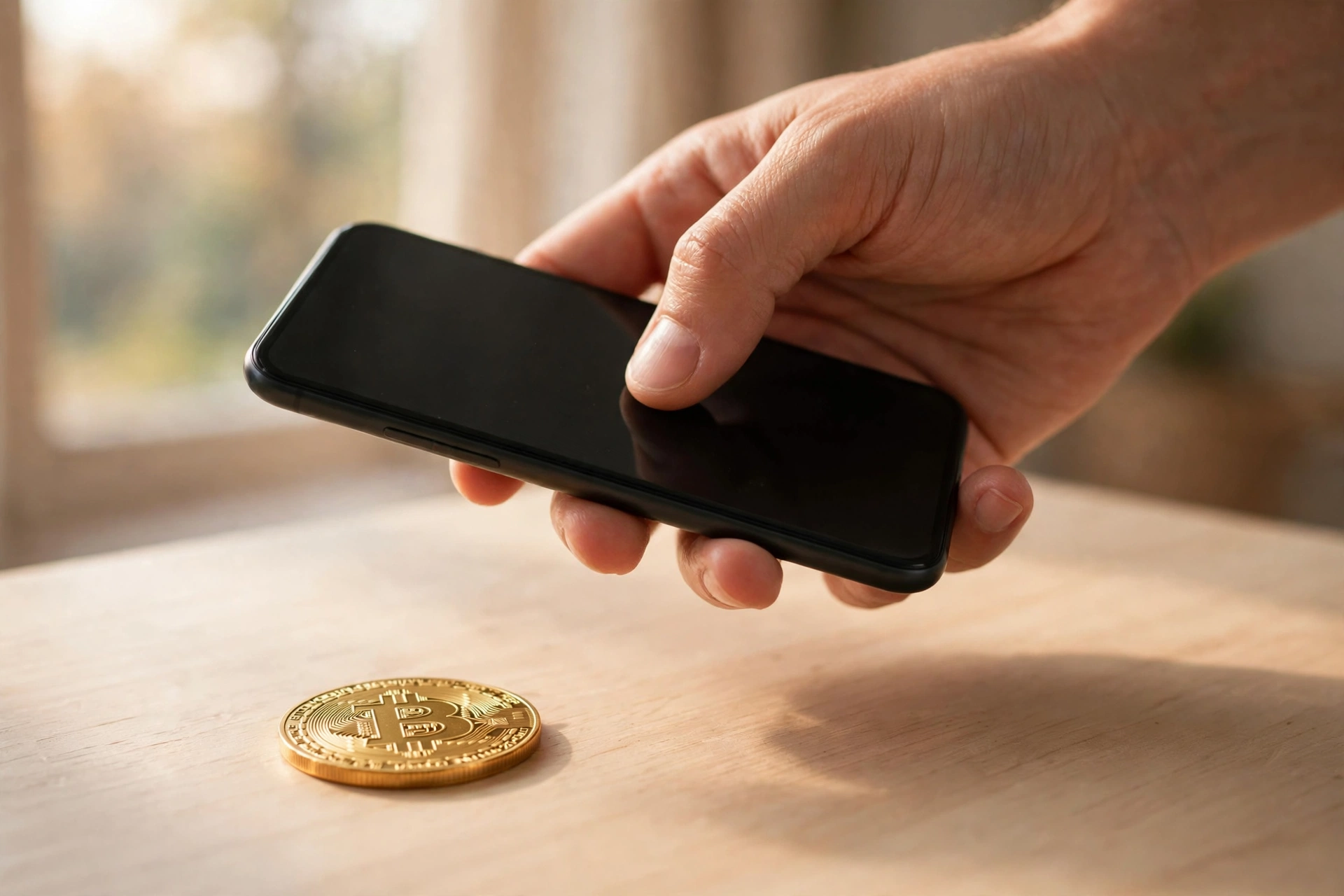
What Is a Bitcoin Faucet?
A Bitcoin faucet is a reward website or app that pays you small amounts of Bitcoin (BTC) in exchange for completing simple tasks. Think of it as a loyalty program in reverse: instead of buying something to earn points, you give a little time and attention, and the site gives you a little Bitcoin back.
The name comes from how the rewards arrive — not in a flood, but in small, steady drips, like water from a leaky tap. Nobody gets rich from a faucet. That was never the point. The point was always to put a tiny piece of Bitcoin into the hands of people who had never owned any, so they could try it out without spending money.
Rewards are paid in satoshis, the smallest unit of Bitcoin. One Bitcoin equals 100,000,000 satoshis, so a typical faucet claim of 20 to 100 satoshis is worth about one to five US cents. The numbers look big on screen, but in dollars they stay very small. That is the first thing any beginner should understand: faucets deal in drops, not buckets.
A Short History: The First Faucet Gave Away 5 BTC
The first Bitcoin faucet appeared in June 2010, created by Bitcoin developer Gavin Andresen. Back then, Bitcoin was barely a year old, almost nobody had heard of it, and a single coin was worth next to nothing. Andresen’s idea was simple: give people free Bitcoin so they would try it, talk about it, and help the network grow.
Visitors to his site solved a simple captcha and received 5 BTC. Yes — five whole Bitcoins, just for proving you were human. Over its lifetime, that faucet gave away around 19,715 BTC — a fortune at today’s prices, but a cheap marketing experiment in 2010 that worked brilliantly. Thousands of early users got their first Bitcoin from a faucet.
Modern faucets work on a much smaller scale. Bitcoin is far too valuable now for anyone to hand out whole coins, so rewards are measured in satoshis. The idea is the same, though: free samples of crypto, given away to spark curiosity.
How Does a Bitcoin Faucet Work?
Every faucet looks a little different, but almost all of them follow the same basic cycle. Here is how it usually goes.
Step 1: Sign Up and Add Your Wallet Address
First, you create a free account with an email address and password. Then you add a Bitcoin wallet address — the address where your rewards will eventually be sent. Many faucets also work through a micro-wallet service such as FaucetPay, which collects small payouts from many different faucets into one balance. If you do not have a wallet yet, this is the first thing to set up.
Step 2: Complete a Small Task
Once your account is ready, you start claiming. The most common tasks are solving a captcha, watching a short advertisement, clicking a link, answering a survey, or playing a simple browser game. Some faucets also pay for daily logins or short crypto quizzes. None of these tasks needs any special skill — they need your time and attention, which is exactly what the faucet is buying.
Step 3: Wait for the Timer, Then Claim Again
Faucets do not let you claim non-stop. After each claim, a timer starts — often 5 minutes, 60 minutes, or 24 hours, depending on the site. When the timer runs out, you can claim again. The timer stops bots from draining the faucet dry and spreads the rewards across real users.
Step 4: Withdraw Once You Reach the Minimum
Your rewards build up in an on-site balance. You cannot withdraw after a single claim, because the amount is too small to cover the network fee. Every faucet sets a minimum withdrawal amount. Once your balance passes it, you can send the Bitcoin to your own wallet. On some faucets this takes minutes; on others it can take days of regular claiming — check the minimum before you invest your time.
Where Does the Free Bitcoin Come From?
Nobody gives away Bitcoin out of kindness. Faucets make their money from advertising. Every ad you watch, every sponsored link you click, and every survey you complete earns the faucet owner a small payment from advertisers. A slice of that revenue is passed on to you as satoshis, and the owner keeps the rest to cover costs and make a profit.
That is why legitimate faucets are always free to join — the model only works when users cost the faucet nothing and generate ad revenue instead. The moment a site asks you to deposit money before you can earn, it is no longer a faucet — it is a trap.
How Much Can You Really Earn from a Bitcoin Faucet?
Let us be honest: not much. A typical claim pays 20 to 100 satoshis, roughly one to five cents. Even claiming every hour, most people earn a few cents to about thirty cents a day — maybe a few dollars in a month, less than the cost of a coffee.
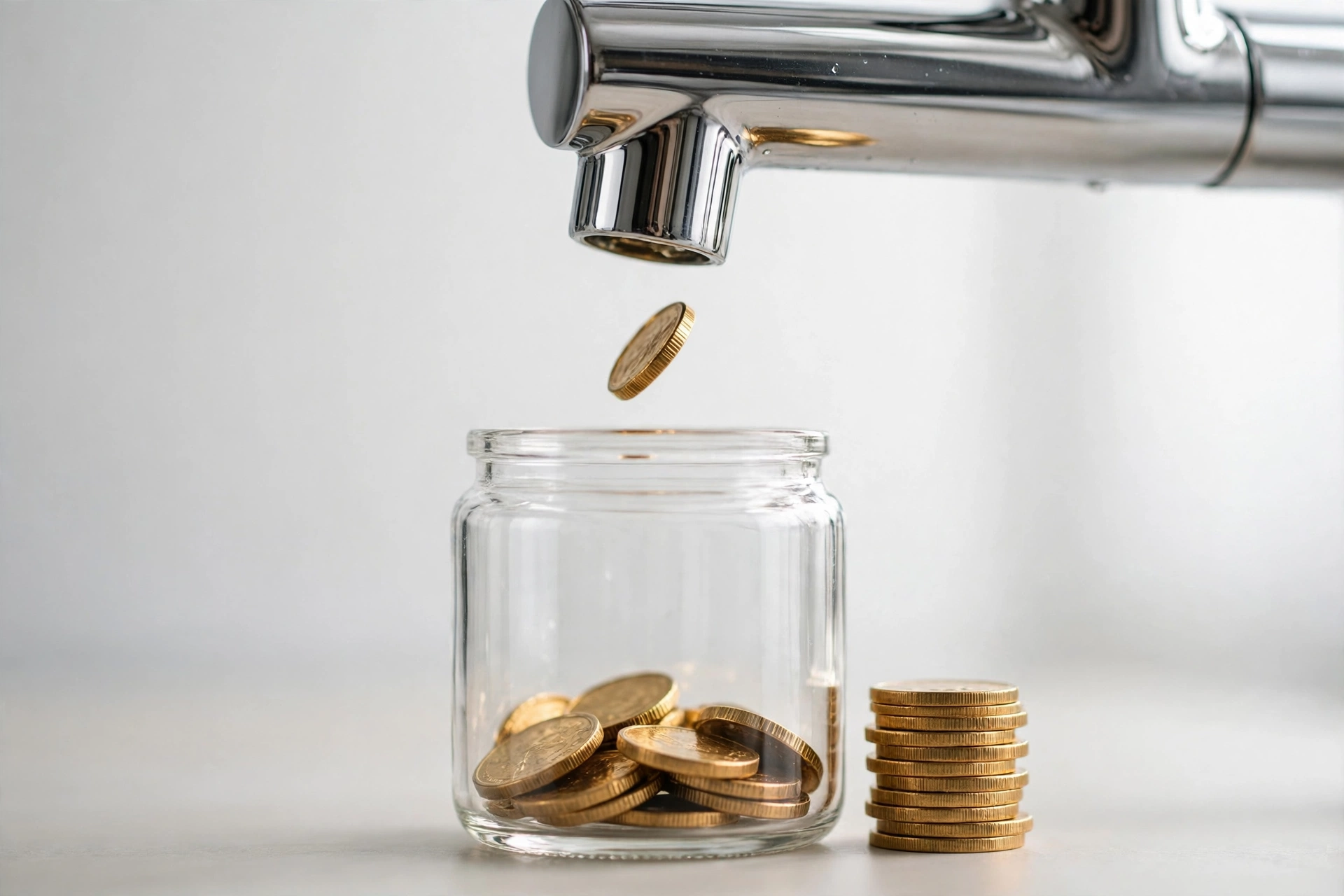
That sounds disappointing, and it is, if you treat a faucet as a way to make money. But faucets were never meant to be an income source. Their honest value is different: they let you learn how Bitcoin works — wallets, addresses, transactions — with real coins and zero risk. For a complete beginner, earning your first few hundred satoshis and watching them arrive in your own wallet is a genuinely useful lesson that costs only a few minutes.
If a faucet promises large earnings, daily profits, or a quick way to get rich, walk away. That is not how faucets work, and the site is lying to you.
Bitcoin Faucets vs. Other Ways to Earn Free Crypto
Faucets are only one of several ways to earn small amounts of crypto without buying it. Paid-to-click (PTC) sites pay you to view ads, survey sites pay you in crypto for answering questions, and learn-to-earn programs pay you for completing short crypto courses. Some apps also offer cashback in Bitcoin when you shop.
The difference is scale and effort. Faucets pay the least and ask the least — a captcha here, a click there. Surveys and learn-to-earn programs usually pay more per task, but they take longer and often want more personal information. Airdrops can pay much more, but they are unpredictable.
For most beginners, the sensible approach is to try a faucet first, because it is free, quick, and teaches the basics. If you enjoy it, you can explore the higher-paying options later.
Are Bitcoin Faucets Safe? 5 Red Flags to Watch For
Most well-known faucets are safe to use, but the words “free Bitcoin” attract scammers, so caution is essential. Watch for these warning signs:
- It asks for a deposit. A real faucet never asks you to send money first. Any site that wants a deposit to “unlock” rewards is a scam.
- It promises big earnings. Claims of hundreds of dollars a day from a free faucet are always false.
- It asks for your seed phrase or private keys. No legitimate service ever needs these. Anyone who has them can empty your wallet.
- There is no contact information or track record. If you cannot find who runs the site or any proof of payouts, do not trust it.
- It forces downloads. A faucet should work in your browser. If it pushes you to install unknown software, close the tab.
A few habits keep you safe on genuine faucets too: use a separate email address, keep your faucet wallet separate from your main wallet, turn on two-factor authentication, and never reuse passwords.
Who Should Try a Bitcoin Faucet — and Who Should Skip It
A faucet is a good fit if you are new to crypto and want to learn by doing, or if you are curious about wallets and transactions and want your first satoshis without spending money.
Skip faucets if you are looking for real income, if your time is worth more than a few cents an hour, or if slow progress and withdrawal minimums frustrate you. In that case, your time is better spent learning a skill, saving, or buying a small amount of Bitcoin directly.
Frequently Asked Questions
What is a Bitcoin faucet — and is it legit?
Yes, genuine faucets do pay — but the payments are very small. Stick to well-known faucets with a long track record, and avoid any site that asks for money upfront.
Do I need to invest money to use a Bitcoin faucet?
No. A real faucet is 100% free — you only need an email address and a Bitcoin wallet. If a faucet asks for a deposit, it is a scam.
How do I receive my Bitcoin?
Rewards collect in your faucet balance or a micro-wallet. Once you reach the minimum withdrawal amount, you transfer the Bitcoin to your own wallet — directly, or through a service such as FaucetPay.
What is a satoshi?
A satoshi is the smallest unit of Bitcoin. One Bitcoin equals 100,000,000 satoshis. Faucet rewards are almost always measured in satoshis because the amounts are so small.
What is the difference between a Bitcoin faucet and a testnet faucet?
A Bitcoin faucet pays real Bitcoin on the main network. A testnet faucet gives developers valueless test coins for testing apps. The two are completely different tools.
Disclaimer: This article is for educational purposes only and is not financial advice. Cryptocurrency prices can change quickly, and earnings from faucets are very small. Always do your own research before using any faucet or wallet, and never share your private keys or seed phrase.


Pingback: Best Bitcoin Faucets in 2026: 7 Trusted Sites That Actually Pay